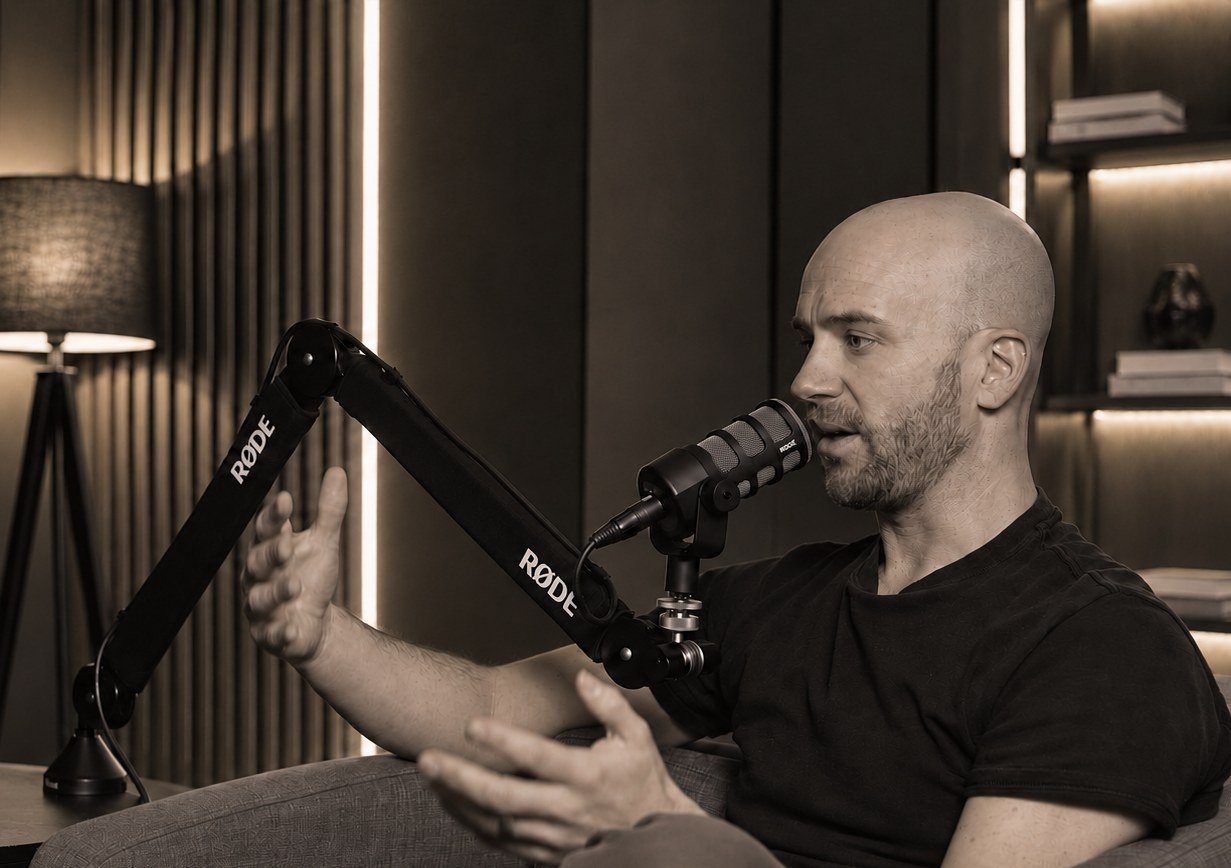
A podcast gives a prospect something no listing photo or headshot can: an hour of how you think. For a Connecticut agent, that is the real case for starting one. The case against is just as plain. Most shows stop early, and an abandoned show says something too.
Here is the honest case on both sides, and how to build a show that lasts.
What a Show Does for an Agent's Brand
Sellers make most of their choice before they call. The National Association of Realtors' 2025 Profile of Home Buyers and Sellers, released in November 2025 and covering sales from July 2024 to June 2025, found that 80% of recent sellers contacted only one agent before choosing the one they worked with. The same report found that 66% used an agent who was referred to them or one they had worked with before.
Referrals still lead, then. But a referral is not the end of the decision. A referred seller can still look you up before calling, and what they find either confirms the referral or quietly undoes it. A headshot shows your face. A listing gallery shows your standards. A podcast shows your judgment, in your own voice, at whatever length the prospect wants to sample.
That is the brand value: long-form proof of local knowledge. A seller who has heard you explain how you would price a house that needs a new roof already knows how you think before the first meeting.
The second value is quieter and can be larger. Interview shows build relationships. Each episode with a local lender, a home inspector, a contractor, a business owner or someone from a town's planning office is an hour with a person who can refer business and share the episode with their own network. Even if the audience stays small, the guest list keeps paying off.
The Audience Is Already Listening
Podcasts are no longer a niche habit. Edison Research's The Infinite Dial 2026, released in March 2026 from a national survey taken that January, found that 58% of Americans age 12 and older, an estimated 167 million people, had listened to or watched a podcast in the last month. Weekly use reached 45%, about 130 million people. Both were record highs.
Among Americans aged 35 to 54, the same study put monthly use at 68%.
These are national figures, not Connecticut ones, and they do not promise a local show a large audience. It does not need one. A show about the towns you sell is built for the people who might list or buy there, plus your guests and their networks. The question is whether the right people have heard you.
What It Actually Costs in Time
The equipment is rarely the problem. The calendar is. Each interview episode means booking a guest, preparing questions, recording, reviewing the edit and posting clips. Editing can be handed off. Booking, preparing and showing up cannot, and they land in the same weeks as listings and closings.
That is why so many shows stop. A 2021 Amplifi Media analysis of the Podcast Index database found that 44% of podcasts had produced three or fewer episodes. The figure is five years old, but newer counts point the same way. Listen Notes counted 605,122 active podcasts in September 2025, meaning shows that had released at least one episode that year, against 3.6 million podcasts created to date, as Barrett Media reported that October.
For an agent, a stalled show is not neutral. It stays online, and a prospect who finds four episodes from two years ago draws a conclusion about follow-through. Decide how many episodes you can finish before you record the first.
A podcast that stops at episode four is still online, and it still tells prospects how you finish things.
Formats That Last
The shows that survive are usually built with an end point or a structure that repeats. Three formats suit an agent's schedule.
1. A season with a fixed number of episodes
Commit to a short season, say eight episodes on one theme, recorded in a few sessions and released over a couple of months. A season ends on purpose, so the break reads as planned rather than abandoned, and a second season can be decided on real evidence.
2. A recurring local guest
Give every episode the same shape: one guest from the trades and services your clients rely on. A lender on what buyers are asking this fall, an inspector on the findings that most often stall a sale, a stager, a local business owner. The fixed shape makes booking easier, and every guest has a reason to share the episode.
3. A short market segment
A brief, regular look at the numbers in your towns, using published figures such as Connecticut Realtors' reports and naming the source. It can stand alone or open each interview. The material renews itself, so it is the easiest format to keep going, and it shows the local command sellers hire for.
Record It on Video So Every Episode Becomes Clips
If you start a show, record it on video. Edison Research's The Podcast Consumer 2026, published in June 2026, reported that in the third quarter of 2025, video overtook audio-only for the first time: 82% of weekly podcast consumers were watching video podcasts, compared with 78% listening to audio only. The Infinite Dial 2026 found that 57% of Americans 12 and older have both listened to and watched a podcast.
Video also does a second job. The full episode is where a serious prospect goes; the clips are what everyone else sees. One good answer, cut short with captions, can run on Instagram, Facebook, LinkedIn and YouTube Shorts, and one episode can supply several, filling a posting calendar without a separate shoot.
Plan for it at the recording. Two cameras, one on you and one on the guest, with steady light and clean sound, cover most needs. Sound matters more than picture: viewers forgive a plain backdrop long before an echo. Leave room on both sides of the frame so a clip can be cropped to vertical.
The show also sits naturally beside shorter video. If you already have an agent intro or market video, the podcast is its long version, and both should look and sound like the same person. Keeping that consistent across every channel is the subject of this post on personal brand consistency.
When Not to Start One
A podcast is not right for every agent, and the honest answer is often not yet.
Do not start one if you cannot list the season's episodes before the first recording. If the list runs out at three, the show will too.
Do not start one to talk about yourself. Prospects sample a show for what they learn about their town, their house and their decision. An hour of your own wins is an hour they will skip.
Do not start one before the basics are in place. A current headshot, an intro video and consistent profiles shape the first impression for far less time each week.
Do not start one in your busiest stretch. If this fall is already full of listings, plan the season now and record it when the calendar opens.
And do not judge it by downloads. Judge it by whether guests send business your way, whether prospects mention an episode, and whether the clips do work on your feeds. Built to end on purpose, recorded on video and focused on your towns, a show answers the question every prospect asks before calling: does this agent know the market?