Every seller who calls in November asks the same question: should we wait until spring? The honest answer is that waiting is a real strategy and a bad default. Winter in Connecticut is not a dead market. It is a thin one — and thin markets reward whoever shows up prepared.
The national pattern is consistent. Median days on market sits in the low 50s in November, climbs to around 60 in December, and peaks near 66 in January before the spring cycle takes over. Fewer homes sell. That part of the conventional wisdom is true.
What the conventional wisdom leaves out is the other side of the ledger: far fewer sellers list, and the buyers still looking in January are not browsing. They are relocating, starting a job, closing out a lease, or working against a school calendar. A thin market with motivated buyers is not a bad place to be. It is just a market with no margin for a weak listing.
Where Connecticut Actually Sits
Connecticut is running about 31 days on market against a national figure roughly twice that, on a median sale price near $498,000 and about 6,900 active listings statewide. Our market is tighter than the country's at every point in the calendar, which means the winter slowdown here is a softening, not a stop.
The constraint that actually bites is light. By mid-December the sun sets around 4:25 in the afternoon. A shoot that starts at three has one usable hour. Gray overcast runs for days at a stretch. Lawns are brown, trees are bare, and the house has nowhere to hide behind landscaping. Winter photography is not harder because it is cold. It is harder because the margin for error disappears.
Why Winter Listings Look Bad
Most winter listing photography fails in one of four predictable ways, and all four are avoidable.
Flat midday gray. An overcast noon exterior produces a white sky, no shadow definition, and a house that reads as a shape. It is the single most common winter listing photo and the least persuasive.
Dead landscape, centered. Composing a winter exterior the same way you would compose a June exterior puts a brown lawn and bare branches in the middle of the frame. The composition has to change with the season.
Dark interiors shot for the windows. With four hours of weak daylight, exposing for the view blows out the room or buries it. Rooms photographed this way look smaller and colder than they are.
The seasonal mismatch. A listing that leads with a lush summer photo and then shows snowy interiors reads as a bait and switch, even when every image is honest. Buyers notice, and what they notice is the inconsistency.
In winter the house has nowhere to hide. No foliage, no golden hour to rescue a bad angle. Everything comes down to timing and light discipline.
The Winter Shoot Playbook
1. Book the weather, not the date
In December and January, the right move is to hold a flexible window and shoot the first clear morning in it. One bright day with low, raking winter sun will produce better exteriors than three scheduled gray ones. Build that flexibility into the listing timeline rather than fighting it later.
2. Twilight is easier in winter, not harder
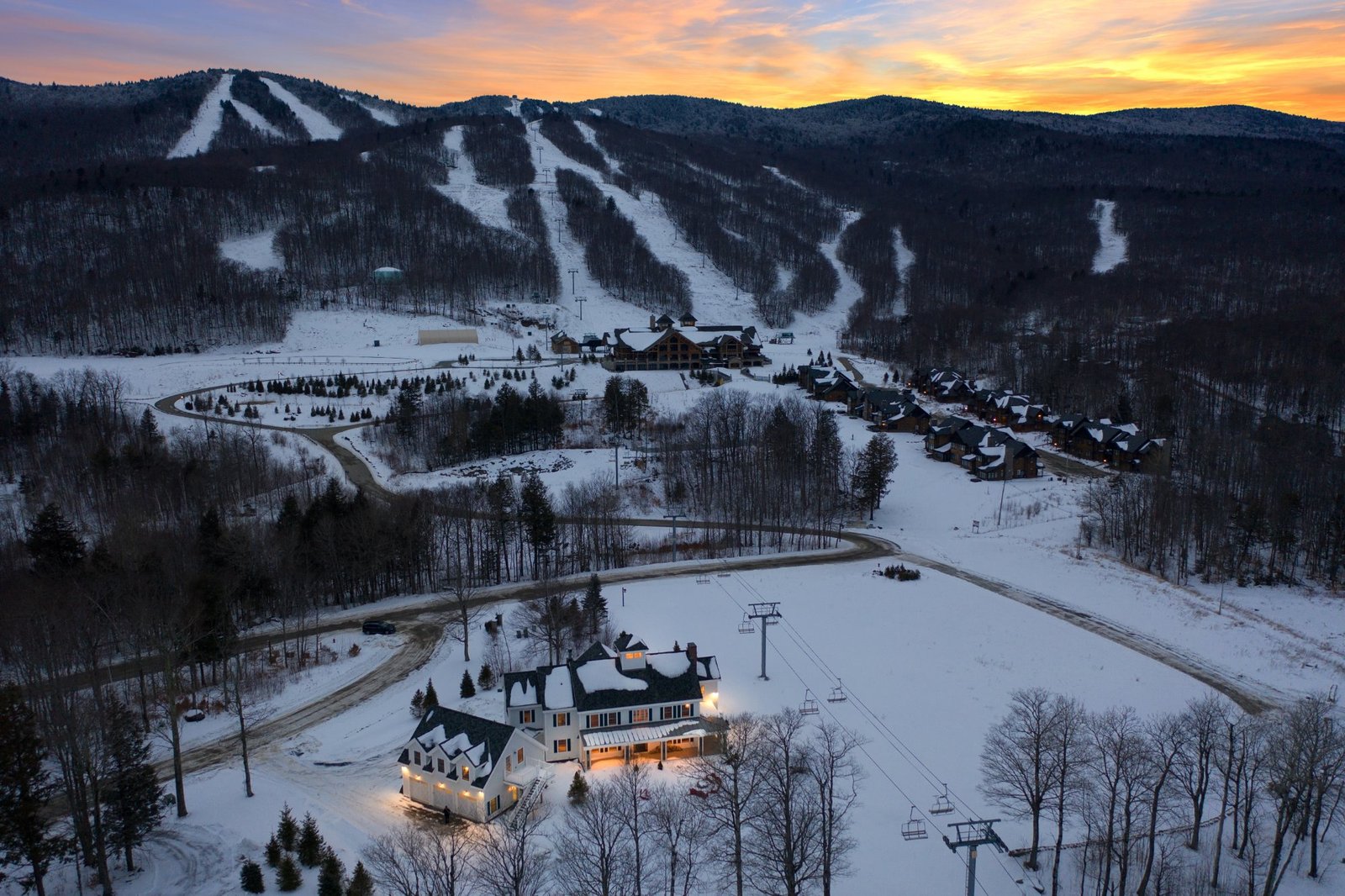
Twilight photography in July means a crew on site at nine at night. In December the blue hour arrives around 4:30 in the afternoon. It is the one scheduling advantage the season hands you, and a twilight exterior solves the bare-landscape problem outright — warm windows, a deep blue sky, and the architecture reading as a silhouette instead of a brown yard. For a winter listing, twilight is not an upsell. It is often the lead image.
3. Light the interior like it's evening
Short days mean interiors need supplemental lighting on almost every shoot, and the goal is a room that looks warm and correctly sized rather than one that looks sunlit when it plainly isn't. Clean, color-accurate interiors beat ambitious window pulls every time in January.
4. Use snow on purpose or not at all
Fresh snow is an asset — it hides a tired lawn, simplifies the composition, and photographs beautifully at twilight. Week-old snow with plow ridges, salt stains, and footprints is a liability. If the forecast is turning, shoot before the thaw or wait for the next storm. A half-melted yard is the worst version of both options.
5. Shoot the aerial when the trees are bare
Bare trees are a problem at ground level and an advantage from above. Lot lines, the shape of the property, water views, and the distance to the neighbors are all more legible in winter than in July. If a listing has land or a view worth proving, winter is the easiest time of year to prove it.
If You're Listing in January
Three practical decisions matter more than anything else.
First, get the photography done before the listing goes live, not after. In a thin market the first week carries most of the traffic a listing will ever get. A placeholder photo set spends that week badly.
Second, be consistent about the season. One set, one time of year, one look. If a strong summer exterior exists, it can run deeper in the gallery as a seasonal reference — clearly what it is, not posing as current.
Third, take the twilight shot. It is the highest-return single image a winter listing can have, and it costs less than most sellers assume.
The Bottom Line
Winter is the season with the least competition and the least forgiveness. Connecticut's market holds up better through it than the national numbers suggest, and the buyers who are out in January tend to be the ones who need to move rather than the ones who are curious.
The sellers who do well are the ones who stop treating winter as a discount season and start treating it as a season with specific requirements: flexible scheduling, early twilight, disciplined interior lighting, and an aerial taken while the trees are bare. Handled that way, December through February stops being the months to survive and becomes the window where a well-prepared listing has almost nothing standing next to it.
For more on timing a Connecticut listing, see our breakdown of the fall listing window and what twilight photography actually does for a listing.